
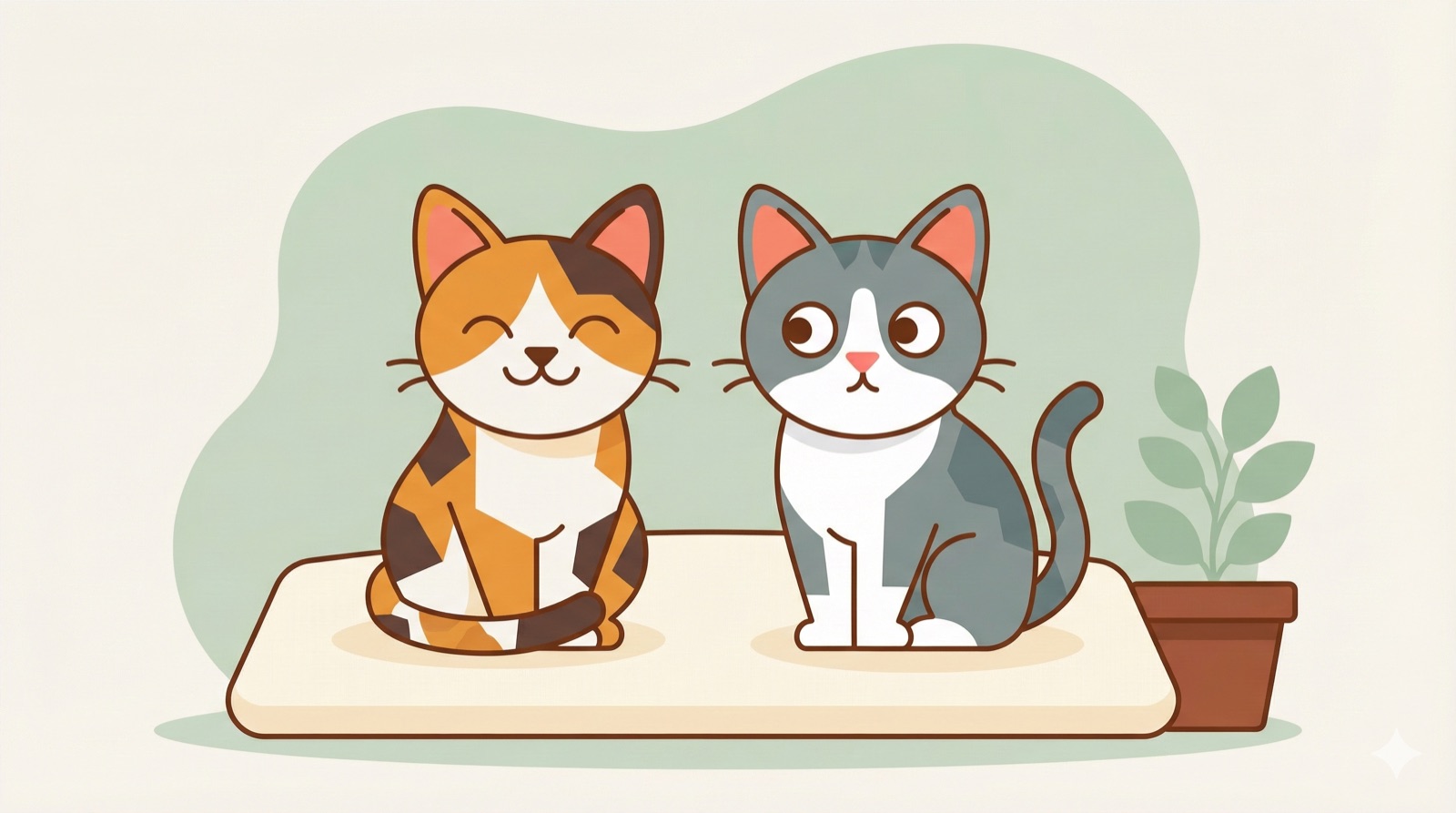
Cats are constantly telling us how they feel through body language. We just need to learn how to read it.
Why This Matters
Cats aren’t as expressive as dogs, but they have rich emotional lives. When we learn to read their signals, we can:
- Comfort your cat when anxious, preventing stress buildup
- Give them space when they want solitude, building trust
- Detect early behavioral signs of health issues
- Build a deeper bond with your cat
The Three Things to Watch
Cat communication comes down to three areas: tail, ears, and body posture. None of these signals work in isolation, so you need to read them together to get the full picture.
The Tail
The tail is surprisingly expressive. Here’s what different positions typically mean:
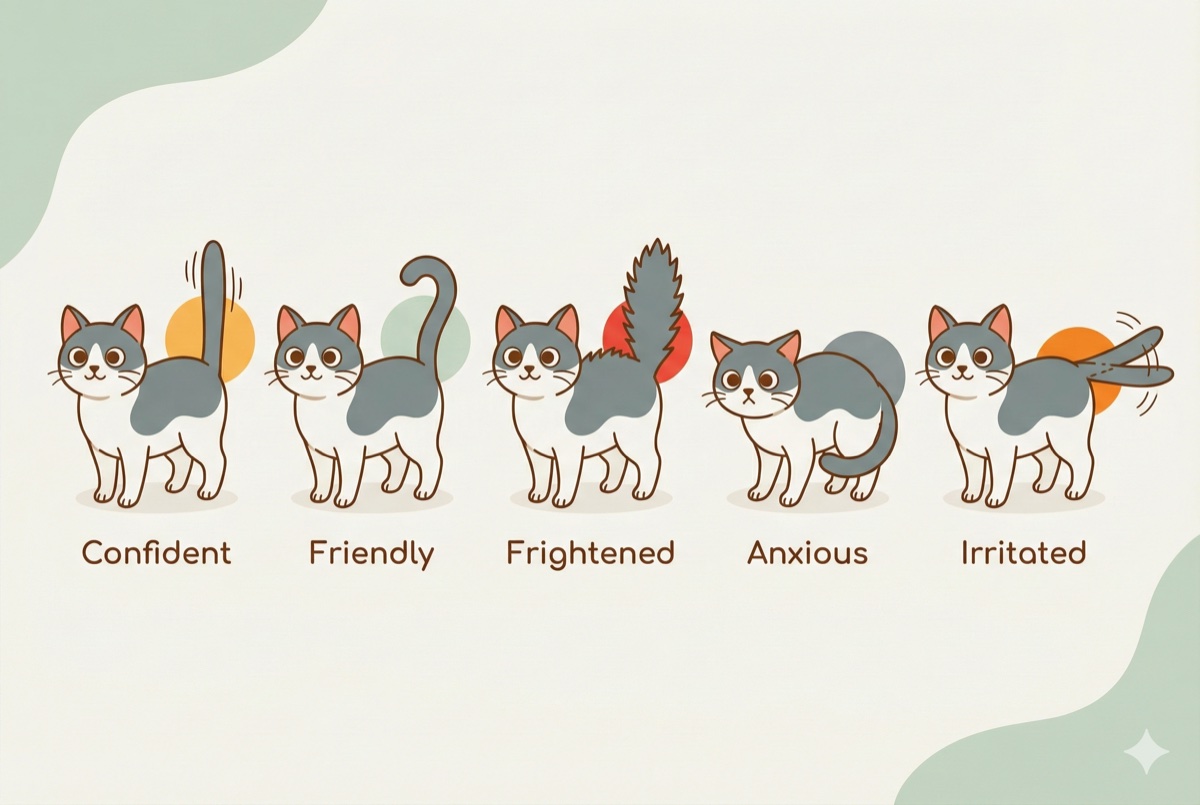
Different tail positions and their emotional meanings
| Position | Meaning |
|---|---|
| Straight up | Happy, friendly, confident. This is how cats say hello! |
| Up with curved tip | Very happy, showing great affection |
| Horizontal | Focused, observing, assessing the environment |
| Low | Uneasy, feeling insecure |
| Tucked between legs | Fearful or submissive |
| Puffed up | Frightened/defensive, OR very excited during play |
| Fast side-to-side swishing | Agitated, annoyed, or overstimulated |
| Tip twitching slightly | Focused on prey or mildly excited |
Common mistake
A wagging tail doesn’t mean what it does for dogs. When a cat’s tail is swishing fast, they’re usually annoyed or overstimulated. That’s your cue to back off.
The Ears
Cat ears rotate independently and move quickly with mood changes:
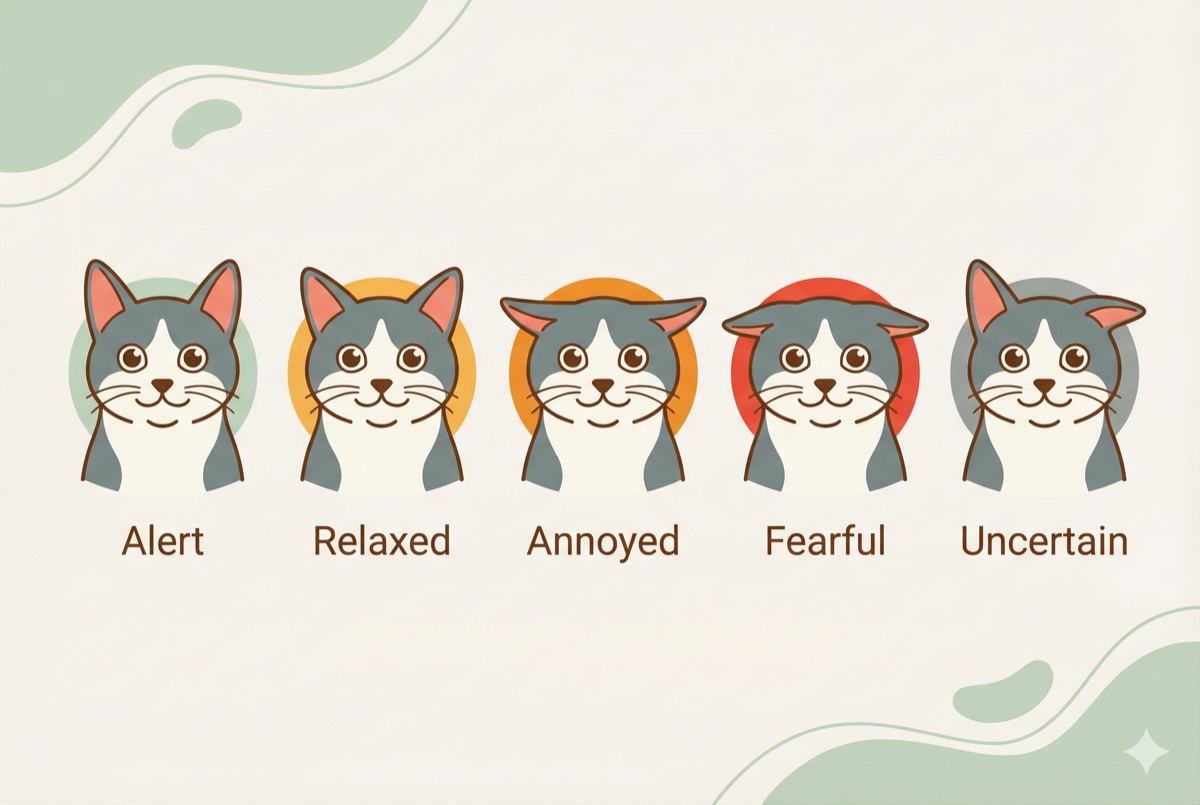
Ear positions and their emotional meanings
| Position | Meaning |
|---|---|
| Forward and upright | Alert, curious, interested |
| Slightly back | Relaxed, content |
| Rotating sideways | Listening intently to surrounding sounds |
| Flattened backward | Displeased, anxious, or angry |
| Flattened sideways (airplane ears) | Fearful or in defensive mode |
Body Posture
The overall body shape ties everything together:
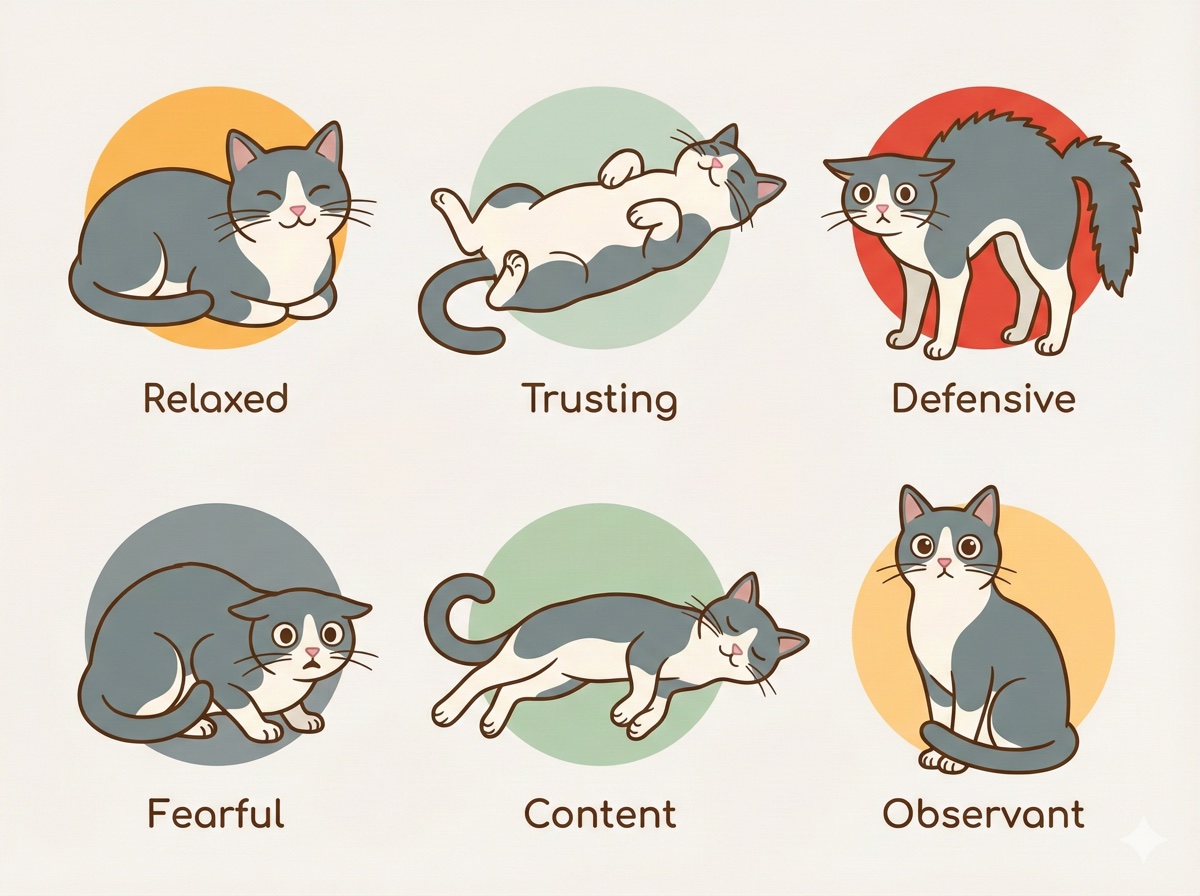
Common body postures and their meanings
A relaxed cat will sprawl out, expose their belly, and purr. When happy, their tail goes straight up and they’ll approach you for head bunts. A playful cat has dilated pupils and crouches low, ready to pounce. Anxious cats over-groom, hide more, and eat less. A scared cat flattens their ears, tucks or puffs their tail, and curls up small.
The Slow Blink
Here’s a fun one: if your cat slowly blinks at you, that’s their way of saying “I trust you.” In cat language, staring is threatening, so deliberately closing their eyes is like saying “I feel safe enough around you to let my guard down.”
Try slow-blinking back. It sounds silly, but it works. It’s basically cat for “I love you too.”
How FurWise Can Help
Reading cat body language takes practice. FurWise uses image analysis to help you understand what your cat might be feeling.
The app analyzes photos of your cat for:
- Tail position and angle: Determines confidence level and emotional tendency
- Ear direction: Assesses alertness, relaxation, or anxiety levels
- Overall posture: Comprehensive analysis of current emotional state
Just take a photo, and the app will tell you your cat’s current mood with appropriate interaction suggestions. It’s a great tool for new cat parents or anyone wanting to better understand their furry friend.
Putting It All Together
Always look at tail, ears, and posture together rather than in isolation, and remember that every cat is different. If your cat signals “leave me alone,” respect it. Building trust takes time, and the more you pay attention, the better you’ll get at understanding what your cat is telling you.
References
- Bradshaw, J. W. S. (2016). Cat Sense: The Feline Enigma Revealed. Penguin Books.
- Humphrey, T., et al. (2020). The role of cat eye narrowing movements in cat–human communication. Scientific Reports, 10, 16503. DOI
- Miklósi, Á., et al. (2005). A comparative study of the use of visual communicative signals in dog-human and cat-human interactions. Journal of Comparative Psychology, 119(2), 179-186.
- International Cat Care. (2023). Cat Body Language. icatcare.org