Most owners’ first reaction when a cat stops using the litter box is “she’s mad at me” or “he’s being bad.” But a cat that pees or poops outside the box is usually dealing with one of three things: something is wrong with her body, the box doesn’t suit her, or something in the home makes toileting feel unsafe. Working out which one it is tells you where to start.
See the vet before you rearrange the boxes
House soiling is a very common behavior problem, and it is often the first thing an owner notices when a cat is unwell. Before you change the box or start retraining, take your cat to the vet for a basic workup. This matters most when the problem started suddenly, because a sudden change in toilet habits usually has a physical cause. When a cat feels sick, even a perfect box setup won’t help.
Common medical causes:
- Lower urinary tract disease (FLUTD): bladder inflammation, crystals and stones all make peeing painful, and a cat in pain starts avoiding the box.
- Kidney disease: the cat produces far more urine. If the number of boxes or the cleaning can’t keep up, she goes somewhere else.
- Hyperthyroidism and diabetes: both make a cat drink and pee more, so a box setup that used to be enough no longer is.
- Arthritis or other pain: an older cat may find it painful to step over a high-sided box, and if getting there means jumping off the couch and walking across the house, she is even less likely to go.
- GI issues: soft stools, constipation or impacted anal glands can make pooping uncomfortable. After a few painful trips, the cat links the box itself with pain.
A male cat going in and out of the box without peeing is an emergency
Male cats have a very narrow urethra. If crystals or a plug block it completely, urine can’t get out, toxins build up, and the cat can die within 24 to 48 hours. If a male cat shows any of these signs, go to an emergency vet right away, not tomorrow:
- going in and out of the box, squatting for a long time with no urine
- crying
- licking or chewing at the genitals over and over
- a swollen belly
What the vet will do
A basic workup usually includes a urine test for crystals, blood and bacterial infection, plus blood work to check the kidneys and electrolytes. If stones are suspected, the vet may add an X-ray or ultrasound. Only when all of that comes back normal does the focus shift to behavior and environment.
Peeing outside the box and spraying are different problems
The two need different fixes, so start by working out which one you have.
If your cat squats and leaves a puddle on a flat surface, that is ordinary house soiling. Beds, rugs and laundry piles are the usual targets, and it usually means the cat feels unwell or doesn’t like the current box.
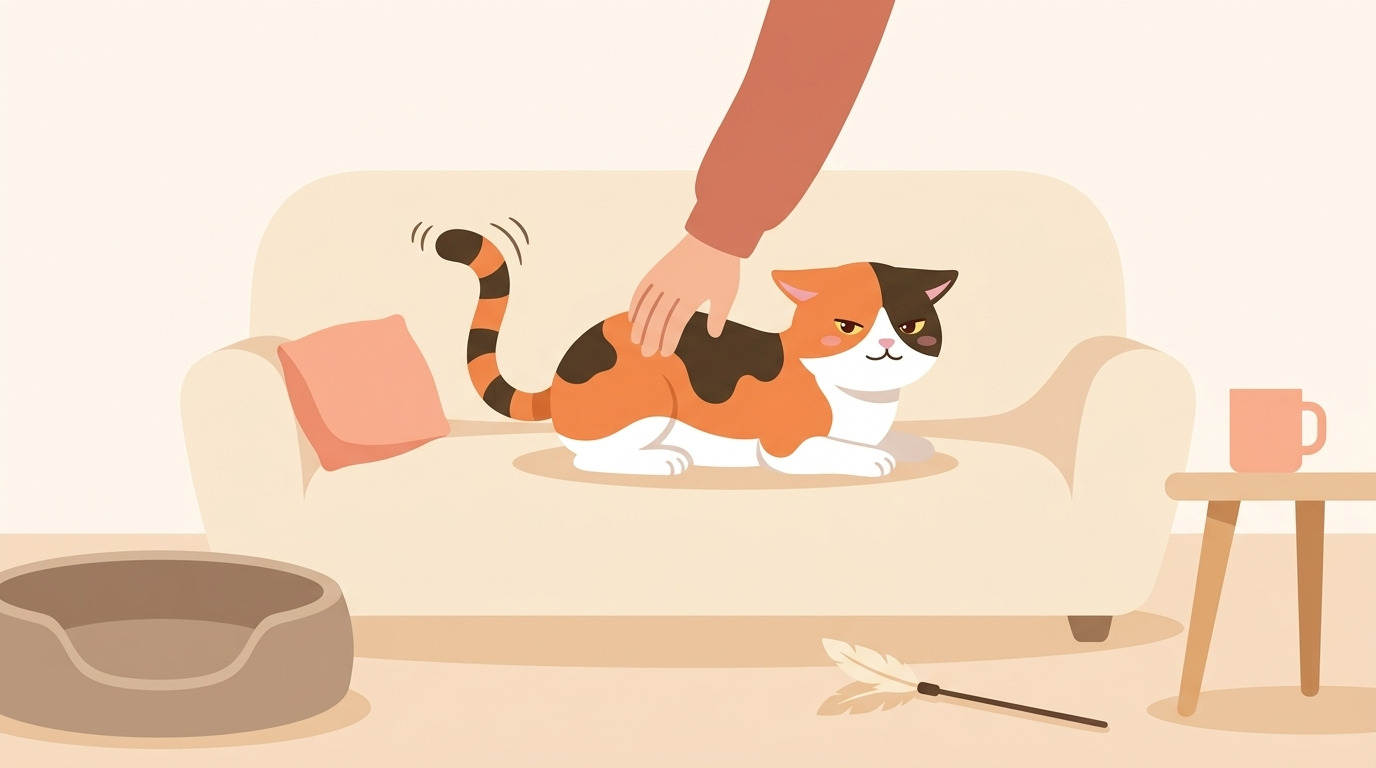
If your cat stands and sprays a small amount against a wall or furniture, that is spraying, also called urine marking, and it is how cats claim territory. While spraying, the tail is held up and quivers. Even after neutering, around 10% of males and 5% of females still spray.
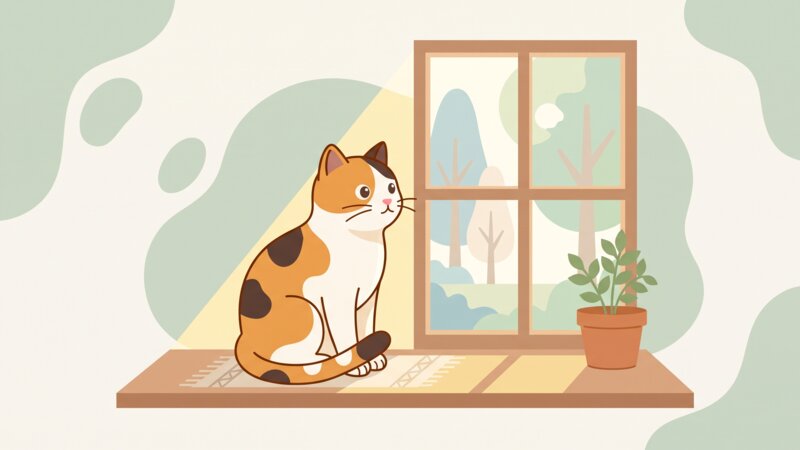
Spraying is closer to leaving a note for other cats, and it is usually driven by territorial stress: a new cat in the home, a stray hanging around outside the window, or resident cats that don’t get along. The rest of this article focuses on squatting and puddles, but the stress-reduction steps help with spraying too.
Most of the fix is in the box itself
Once your cat has a clean bill of health, the box is the first thing worth changing, and it is also the easiest.
One more box than you have cats
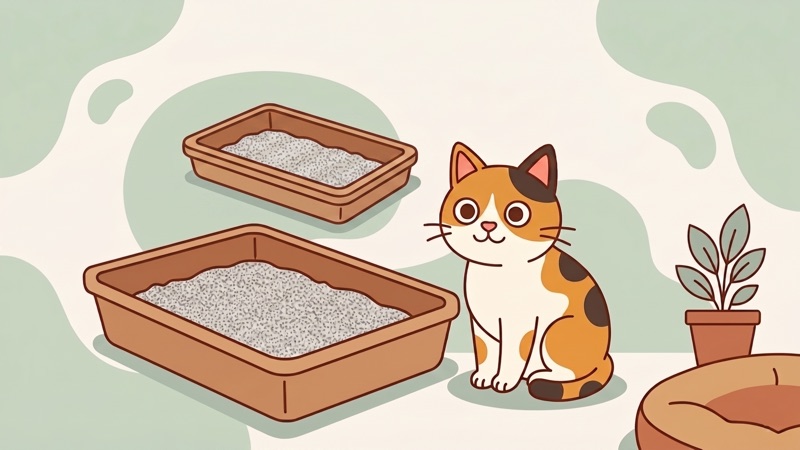
The n+1 rule says to provide as many boxes as you have cats, plus one. Two cats, three boxes. Three cats, four boxes. The extra box means every cat has one she doesn’t have to compete for.
The boxes need to be in different places. Two boxes side by side in the same corner count as one from the cat’s point of view. One upstairs, one downstairs, one in a bathroom: that’s three.
Bigger than you think
The box should be big enough for the cat to stand up fully and turn around on all four feet without touching the sides. Most covered “cat house” boxes sold in stores are too small, and cats over 5 kg (about 11 lbs) or large breeds like the Maine Coon feel the squeeze most.
If you can’t find a box that big, a storage tub 70 cm (28 inches) or longer with one side cut down as an entrance works well. It’s roomy, cheap and easy to clean.
Should the box have a cover?
For the cat, covers do more harm than good. A lid seems like it should contain the smell, but it actually traps odor inside, and the cat can’t see what’s coming while she’s in there. Start with an open box. If yours are covered, try taking the lids off.
In a home with several cats or a dog, some cats do want a little shelter. A large open box tucked into a corner or a quiet spot gives that sense of safety and still lets the smell air out.
Choose unscented clumping litter
Most cats prefer fine-grained, unscented clumping litter, filled about 4 to 5 cm (roughly 2 inches) deep so they can dig and cover. Scented litter smells nice to people, but a cat’s nose is far more sensitive than ours, and the perfume alone is often enough to keep her out. Pine pellets, paper and crystal litters all work too. If your cat suddenly stops using the box, first ask whether you recently changed litter.
Change litter gradually. Switch the whole box to something new at once and many cats simply stop going in and pee on the floor instead. You can keep the old litter, put a second box with the new litter next to it, and let the cat choose. Or mix new into old, starting at about 30% new, then half a few days later, then 70%, until it’s all new.
Scoop daily, replace it all every few weeks
Scoop urine clumps and stool at least once a day. Once a box has two or three clumps in it, many cats won’t step inside. If you scoop daily, replacing all the clumping litter every one to four weeks is enough, and that’s the time to wash the box with a mild dish soap. Avoid bleach or strongly scented cleaners. The smell can put a cat off the whole area.
The box is fine and the cat still won’t use it
The location feels unsafe
A box next to the washing machine, in the middle of a hallway, or on the route kids and the dog use all day means the cat is braced for an interruption every time she goes. The best spot is quiet and open 24 hours a day, and well away from the food and water bowls.
Cats instinctively don’t toilet where they eat. If the bowls sit too close to the box, some cats stop eating there or stop using the box.
She has started peeing on fabric
After a bad experience in the box, some cats switch to soft fabrics instead: towels, rugs, beds, bath mats. These are soft, absorbent and already smell of the cat, so she keeps going back. Work on both sides at once: make the soiled spot unappealing, and make the box more appealing.
Clean the soiled spot with a pet enzyme cleaner to get rid of the smell completely. Ordinary cleaners don’t break down the proteins in urine, and as long as the smell is there, the cat will come back. Once it’s clean, cover the spot for a while with aluminum foil or double-sided tape, or set a bowl of water on it, so she doesn’t want to step there. Don’t clean cat urine with ammonia-based cleaners. Ammonia smells a lot like cat urine, so the cat takes the spot for a toilet.
For the box, put one right beside the spot she has been using, and make sure its size, litter and cleaning are all right. Once she is using it regularly, move it a few centimeters a day toward where you want it.
Cats competing over territory
Cats that look peaceful together can still be quietly at odds. One cat might sit in the hallway staring at another, or block the way to the litter box, and the cat being watched simply goes somewhere else.
Spread the boxes across different rooms and floors so the cat being pushed around can reach one without crossing the other cat’s turf.
A scare in the box
If a cat was frightened in the box even once, by thunder, the vacuum or another cat, she may refuse to go back in. If the soiling started suddenly and her checkup was normal, think back to whether a noise or event recently scared her. Moving that box somewhere completely different, or replacing it with one that looks nothing like it, lets her get to know it as a new box.
Retraining your cat to use the box
If the soiling has gone on for weeks, the cat has probably come to treat that spot as her toilet. Retraining takes some patience, and the first rule is not to punish her.
Punishment only makes things worse
Dragging the cat to the spot and scolding her, pushing her nose into it, or smacking her afterwards all make things worse. A cat can’t connect being scolded with the puddle she left on the bed an hour ago. She only learns to be afraid of you, and starts hiding to pee somewhere more private.
Besides not punishing, you can find out which litter she prefers. Put two boxes side by side, one with the current litter and one with fine-grained unscented litter, and after a week see which one she uses more.
Lower the stress at home as well. Give her a safe corner to hide in, and keep feeding and play at roughly the same times each day. The cat stress signs article has more ideas.
Most cats improve clearly within two to four weeks. If a month goes by with no progress, or the soiling is spreading to new spots, take her back to the vet. Sometimes a medical problem the first exam missed shows up, and sometimes the next step is a referral to a vet who specializes in behavior.
Keeping track with Furwise
How many times a day she goes, how much she pees, and whether anything ends up outside the box are all things the vet will ask about. In a home with several cats, it’s hard to keep straight from memory. When you log a litter visit in Furwise, you can choose the amount of urine and add a photo, and note where it happened or whether she cried in the notes. Family members can log for the same cat too, so someone else can fill in what happens while you’re out. A week of records gives the vet a much clearer picture than describing it from memory.
Frequently Asked Questions
Is my cat peeing outside the box to get back at me? Almost certainly not. A cat peeing outside the box is usually dealing with a medical problem, a box that doesn’t suit her, or stress at home. Working through those three is the fastest way to find the cause.
My older cat suddenly started peeing outside the box. What do I do? Start with a vet check. In older cats, house soiling often has a medical cause, such as kidney disease, hyperthyroidism, diabetes or arthritis. Also check whether the sides of the box are high enough to hurt when she steps over them. A box with an entry under 10 cm (about 4 inches) often helps quickly.
Does my male cat need to be neutered to stop peeing outside the box? First work out which problem you have. If he stands and sprays a small amount against a wall or furniture, neutering cuts spraying down a lot, though around 10% of neutered males still spray. If he squats and leaves a puddle, neutering won’t help, and the cause needs to be found in his health, the box or the environment.
My cat stopped using the box after I switched litter. What now? Switch back to the original litter. Most cats start using the box again within a few days. Next time, mix it in gradually: start at about 30% new, raise it to half after a few days, then 70%, then all new. Or set up two boxes side by side, one with the old litter and one with the new, and let your cat choose. If switching back doesn’t help, think about what else changed around that time, such as a move, a new family member or a box being moved.
Why shouldn’t I use ammonia-based cleaners or bleach on cat urine? Ammonia smells a lot like cat urine, so the cat takes the spot for a toilet and comes back to pee there again. Bleach mixed with the ammonia in urine can give off irritating fumes, and its smell is so strong that the cat may avoid the whole area, nearby litter boxes included. A pet enzyme cleaner works best, because it breaks down the proteins in urine and removes the smell.
How long does retraining usually take? When there is a single cause, such as a new box or a medical problem that has been treated, most cats improve clearly within two to four weeks. Cats that have been soiling for months take longer and may need help from a vet who specializes in behavior. Count the incidents each week. If the number keeps going down, it’s working.
References
- Ellis, S. L. H., Rodan, I., Carney, H. C., Heath, S., Rochlitz, I., Shearburn, L. D., Sundahl, E., & Westropp, J. L. (2013). AAFP and ISFM feline environmental needs guidelines. Journal of Feline Medicine and Surgery, 15(3), 219-230.
- Buffington, C. A. T. (2011). Idiopathic cystitis in domestic cats: beyond the lower urinary tract. Journal of Veterinary Internal Medicine, 25(4), 784-796.
- Cornell University College of Veterinary Medicine. (2024). Feline Behavior Problems: House Soiling. Cornell Feline Health Center
- Ohio State University Veterinary Medical Center. Indoor Pet Initiative: Litter Boxes. Indoor Pet Initiative