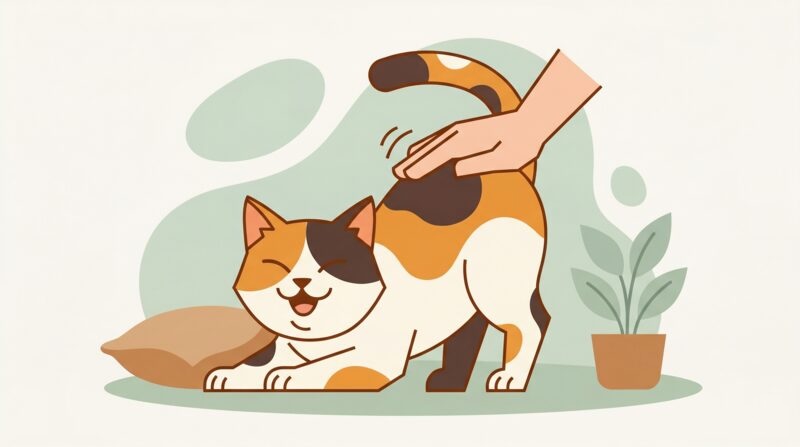
You pat your cat on the bum and they raise their hindquarters, purr, and lean into it. Your friend’s cat gets the same treatment and immediately turns around and bites.
What’s happening at the tail base
The spinal cord ends just before the tail, and a bundle of nerves called the cauda equina fans out from there to control the tail, hind legs, and bladder. That’s a lot of wiring packed into a small area.
Cats also have a scent gland at the top of the tail base that produces pheromone-containing oils used for scent marking. When your cat rubs their flank and tail base along you, they’re leaving scent from it.
The elevator butt reflex
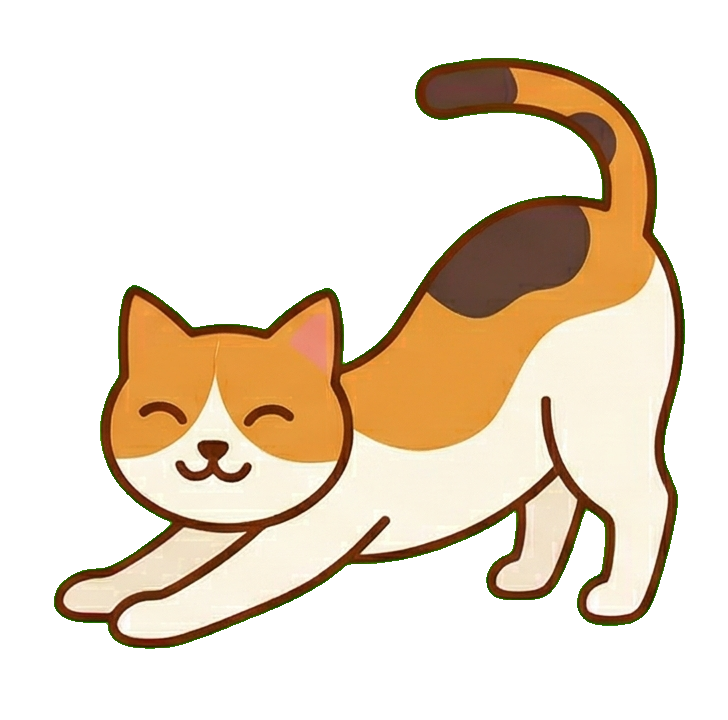
That posture where your cat drops their front end, raises their rear, and kinks their tail to one side? It’s called lordosis, a spinal reflex that fires when you put pressure on the lumbosacral area.
In intact female cats, this posture is part of mating behavior during estrus. Spayed cats and even males do the elevator butt too, and the usual explanation is that the reflex circuit is still there, just no longer tied to mating. That explanation hasn’t been directly tested in cats. The tail base is densely wired, patting it gets a response, and cats often look like they’re enjoying it. That part isn’t in doubt.
Research says most cats actually don’t like it
A 2015 study tested how 34 cats responded to being stroked in different body regions. The tail base consistently drew the most negative reactions, while the area between the eyes and ears was the clear favorite.
A 2002 study found the same pattern: cats preferred being touched on the head and face, and got visibly unhappier near the tail.
So if research says cats don’t like it, why does your cat seem to love it?
Those studies used gentle stroking. A slow stroke along the back and a quick rhythmic tap at the tail base are two different things to a cat. The handlers were also strangers, and cats tolerate tail-area contact far better from people they trust. The rest is individual variation: some cats genuinely enjoy it, some tolerate it briefly before hitting their limit, some hate it from the start.
How to tell if your cat actually likes it
Watch the body language. A cat that’s enjoying butt pats will:
- Raise their hindquarters and lean into the pressure
- Purr or knead
- Come back for more after you stop
- Keep their ears forward and relaxed
A cat that’s had enough (or never wanted it) will:
- Flatten their ears or swish their tail fast
- Turn around and nip or swat
- Walk away or crouch down
- Dilate their pupils suddenly
The shift from “enjoying it” to “overstimulated” can happen fast. If you’re not sure, read up on cat body language signals for a more complete picture.
How to do it without hurting them
A normal pat isn’t going to hurt a healthy cat, but technique matters.
- Use an open palm on the fleshy part of the rump, not directly on the spine
- Keep it light to moderate. A loud slap means you’re going too hard
- Steady rhythm works better than random whacks. Think gentle drumming, not swatting a fly.
- Start with a few pats and pause. If your cat leans back in or nudges you, they want more. If they walk away, respect it
- Be careful with older cats. Lumbosacral arthritis is common, and what used to feel good might now hurt
- Skip it if your cat is eating, sleeping, or tense. Timing matters as much as technique
When butt pats might mean something’s wrong
A few changes worth paying attention to:
- Flinching or aggression where they used to enjoy it could signal pain from lumbosacral arthritis, especially in older cats
- Excessive licking at the tail base might point to flea allergy dermatitis, which typically concentrates there
- Rippling skin along the back after you touch it can point to feline hyperesthesia syndrome, where the skin along the back and tail base becomes painfully sensitive to touch
If your normally bongo-loving cat suddenly can’t stand being touched there, something may have changed physically. A vet visit is worth it.
Frequently Asked Questions
Why does my cat raise their butt when I pat it? It’s a spinal reflex called lordosis. Pressure at the tail base makes the hindquarters go up. Spayed and neutered cats show it too; the usual explanation is that the reflex circuit is still there, just no longer tied to mating, though that hasn’t been directly tested in cats. Not all cats have the same sensitivity.
Is it bad to pat my cat on the bum? No, as long as your cat is enjoying it. Watch their body language: forward ears, purring, and leaning in are good signs. Flattened ears, tail lashing, or turning to bite means stop.
Why does my cat bite me after I pat their bum? Petting-induced overstimulation. The tail base is packed with nerve endings, and what starts as pleasant can cross into “too much” quickly. The bite is your cat’s way of saying they’ve had enough, and it’s the clearest signal they’ve got.
References
- Ellis, S. L. H., et al. (2015). The influence of body region, handler familiarity and order of region handled on the domestic cat’s response to being stroked. Applied Animal Behaviour Science, 173, 60-67. ScienceDirect
- Soennichsen, S., & Chamove, A. S. (2002). Responses of cats to petting by humans. Anthrozoös, 15(3), 258-265.
- Amengual Batle, P., et al. (2019). Feline hyperaesthesia syndrome with self-trauma to the tail. Journal of Feline Medicine and Surgery, 21(2), 178-185. PubMed
- Pageat, P., & Gaultier, E. (2003). Current research in canine and feline pheromones. Veterinary Clinics of North America: Small Animal Practice, 33(2), 187-211.