A little crust in the corner of the eye after a nap is normal. An eye that waters all day, glues itself shut, or weeps something thick and yellow needs a closer look. Eye problems get worse quickly, and the color and amount of the discharge, plus whether the eye looks painful, tell you whether to go to the vet right away.
When eye discharge is normal, and when it isn’t
A small fleck of dark or reddish-brown crust in the inner corner first thing in the morning is just dried tears and nothing to worry about. A cat’s eyes make tears all day to keep the surface moist and clean, and the extra drains through a tiny channel into the nose.
Pay closer attention if one eye waters all day, or crusts over again within a few hours of being wiped. The same goes for discharge that turns yellow or green, a red or swollen eye, or a cat who squints or paws at their face. Besides the amount and color, notice whether your cat seems bothered by it.
What the discharge is telling you
The look of the discharge won’t tell you which illness it is, but it does tell you how urgent it is.
| What you see | What it usually means | What to do |
|---|---|---|
| Clear, watery tears | Tears not draining, or mild irritation | Watch it first. If it started suddenly, affects one eye, or your cat seems bothered, see a vet soon |
| Thick yellow or green discharge | Infection, often conjunctivitis | See a vet. This needs treatment |
| Reddish-brown staining below the eye | Tears that have run onto the fur for a long time and dried | Mostly cosmetic. Mention it at the next visit |
| Discharge with a red, squinting eye | A painful problem such as a corneal ulcer | See a vet the same day |
One eye or both eyes
When only one eye is affected, the cause usually lies in that eye: a scratch on the surface, something caught under the eyelid, a blocked tear duct on that side, or an injury from a fight. When both eyes are affected, a contagious infection such as a URI is more likely. Treat this as a rough guide only, since herpesvirus often starts in one eye before moving to the other.
What causes eye discharge in cats
Conjunctivitis and upper respiratory infections
Conjunctivitis is inflammation of the pink tissue lining the eyelids, and it’s the most common reason a cat’s eye runs. The eye looks red and puffy, and the discharge can be anything from watery to thick and yellow.
The most common cause is feline herpesvirus, one of the main causes of upper respiratory infections (often called cat flu). Others include Chlamydia felis, Mycoplasma and feline calicivirus, and the first two hit the eyes especially hard. Eye discharge together with sneezing and a runny nose usually means an upper respiratory infection (URI).
Most cats infected with herpesvirus carry it for life. The virus stays quiet most of the time and flares up again when the cat is under stress. That’s why a cat can get a weepy, red eye months or even years after the first infection, with no new cat anywhere nearby.
Corneal injuries and ulcers
The cornea is the clear layer at the very front of the eye. A fight, a stray claw during rough play, or something blowing into the eye can scratch it, and a scratch can turn into a corneal ulcer. Herpesvirus can cause ulcers too.
A corneal ulcer hurts and gets worse quickly. The cat usually squints or keeps the eye shut, paws at their face and avoids light, and the eye may look cloudy. An untreated ulcer can deepen within a day or two, and in the worst cases the eye can be lost. Anything that looks like an ulcer needs a vet the same day.
A painful, cloudy or very red eye can also be glaucoma or uveitis (inflammation inside the eye), which are just as urgent. Whatever the cause, a clearly painful eye needs a vet, not guesswork.
A blocked tear duct
If the channel into the nose gets blocked or narrowed, tears have nowhere to go and spill over the lower lid. Scarring after a bout of herpesvirus is a common cause. The eye waters constantly but isn’t necessarily red or infected. It’s more of a nuisance than an emergency, and a vet can confirm it and sometimes flush the duct clear.
Dry eye
In dry eye, the eye doesn’t make enough tears. Without them washing and lubricating the surface, a thick, sticky discharge builds up. Cats get dry eye less often than dogs do, and when they do, it often goes back to an old herpesvirus infection. A vet can measure tear production with a quick, painless test. If one eye stays goopy and doesn’t behave like a typical infection, ask your vet whether it could be dry eye.
A foreign body
A grass seed, a piece of litter or a bit of plant can get caught under an eyelid or behind the third eyelid. It usually comes on suddenly in one eye, with a lot of watering, squinting and pawing. A vet needs to find and remove it. Trying to dig it out at home can scratch the cornea.
Breed and eyelid shape
Flat-faced cats such as Persians, Exotic Shorthairs and Himalayans tend to have watery eyes because of how their faces are built. Their eye sockets are shallow and their tear ducts don’t drain well, so tears overflow and the fur below the eyes often stains. Eyelid shape matters too. In entropion, the eyelid rolls inward so its fur rubs against the eye, causing constant irritation and discharge until it’s corrected.
Signs that mean a vet visit cannot wait
Most eye discharge can wait a day for a regular appointment. A painful eye can’t, and pain in a cat’s eye is easy to spot.
A squinting or painful eye needs a vet the same day
If your cat is squinting or holding an eye shut, pawing or rubbing at it, avoiding light, or the eye looks cloudy, it may be a corneal ulcer or another painful eye problem, and it can get worse within a day or two. Don’t wait for it to clear up, and don’t put in leftover or human eye drops first. The wrong drop can make an ulcer much worse. A visible injury, a bulging or bleeding eye, or sudden blindness, such as bumping into things, also needs a vet the same day.
When to book a regular vet visit
If the eye isn’t painful but you notice any of these, book a vet visit. It doesn’t need to be an emergency trip.
- Discharge that lasts more than a day or two
- Thick, yellow or green discharge
- An eye that keeps crusting shut after you clean it
- Red or slightly swollen eyelids
- Watering that keeps coming back
- Sneezing, a runny nose or eating less at the same time
Kittens need faster care. Newborn and very young kittens can get serious eye infections, sometimes before their eyes have even opened. If the eyelids look swollen or bulging, or there’s pus at the lid edge, take them to a vet promptly rather than waiting to see.
How to clean your cat’s eyes safely
While you wait for an appointment, or during a mild flare your vet already knows about, you can gently clean your cat’s eyes at home. Dried discharge is uncomfortable and mats the fur around the eye.
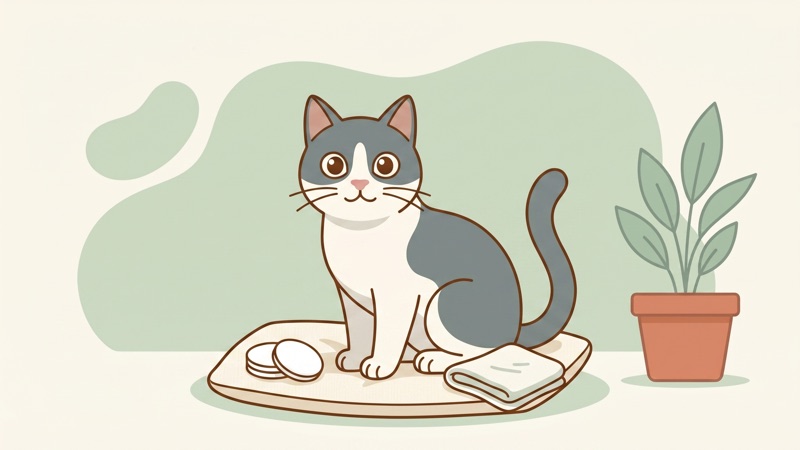
Dampen a clean cotton pad or soft cloth with warm water, or sterile saline if you have it. Wipe gently from the inner corner outward, in the direction the discharge flows. Use a fresh pad for each eye. Reusing a pad carries an infection from one eye to the other. While there’s discharge, wiping about twice a day is usually enough. In a multi-cat home, wash your hands afterward and keep the cleaning supplies separate.
Don’t use human eye drops, contact lens solution, or drops left over from a previous problem. Some ingredients can badly worsen an undiagnosed corneal ulcer or a herpesvirus eye infection. Don’t force a stuck-shut eye open, and don’t touch the surface of the eye. Plain water or saline on the fur around the eye is fine, but anything that goes into the eye should come from your vet.
What treatment looks like
Treatment depends on the cause, so the eye needs a diagnosis before any medication goes in. During the exam, a vet will often use a harmless stain that makes a corneal ulcer show up, then treat whatever they find.
Bacterial conjunctivitis is usually treated with antibiotic drops or ointment. Chlamydia often needs oral antibiotics, taken for the full course, because drops alone often don’t clear it. Herpesvirus has no cure, so a vet may use antiviral medication along with other care to keep it under control. A corneal ulcer needs pain relief and protection from infection while it heals, sometimes with a cone so your cat can’t rub it, and a deep ulcer may need surgery.
Whatever the cause, steroid eye drops are off the table until a vet has ruled out an ulcer, because steroids can make an ulcer or a herpesvirus infection much worse. A leftover tube at home may well contain a steroid, which is why you shouldn’t reach for one.
Lowering the chances of eye trouble
Keeping your cat up to date on the core FVRCP vaccine helps, since it covers herpesvirus and calicivirus, and an infected cat gets milder eye symptoms. Stress is the most common trigger for herpesvirus flares, so a calmer life means fewer of them. A low-dust home also spares the eyes some irritation.
For flat-faced cats, gentle routine cleaning around the eyes and regular checkups are part of normal care, not a sign that something is wrong.
Cats are good at acting as if nothing is wrong. A few seconds each day checking that both eyes are clear, bright and matching will catch small problems early.
How Furwise Can Help
An eye problem is easier to explain to a vet when you’ve written it down. In Furwise, log an “Eye discharge / watery eyes” symptom, choose how severe it is, add a few photos, and note which eye in the notes. Log again whenever it changes. At the visit, open the app and you can answer what the vet will ask: one eye or both, how long, and whether it’s getting worse.
Frequently Asked Questions
Is a little eye discharge normal in cats? Yes. A small fleck of dark or reddish-brown crust in the inner corner after sleep is just dried tears. Watch for discharge that keeps coming, is thick, or turns yellow or green, or an eye that is red, swollen or squinting.
Why does my cat have discharge in only one eye? The cause usually lies in that eye: a scratch or ulcer on the surface, something caught under the eyelid, a blocked tear duct on that side, or an injury. Discharge in both eyes more often means a contagious infection such as a URI. Treat this as a rough guide only, since herpesvirus often starts in one eye.
Can I use human eye drops on my cat? No. Don’t use human eye drops or drops left over at home. Some ingredients, steroids in particular, can seriously worsen an undiagnosed corneal ulcer or herpesvirus infection. Wiping around the eye with warm water or sterile saline is fine, but medicated drops should come from a vet who has examined the eye.
What does the brown staining under my cat’s eyes mean? When tears don’t drain through the tear duct and run onto the fur instead, they dry into a reddish-brown stain. It’s especially common in flat-faced cats. The stain is mostly cosmetic, but if the eye keeps watering, mention it to your vet, since it’s sometimes a blocked duct.
How do I clean my cat’s eyes safely? Dampen a clean cotton pad or soft cloth with warm water or sterile saline and wipe gently from the inner corner outward. Use a fresh pad for each eye so you don’t carry an infection to the other one. Don’t use human eye drops, don’t force a stuck-shut eye open, and don’t touch the surface of the eye.
When is cat eye discharge an emergency? When your cat is squinting or holding an eye shut, pawing at it, avoiding light, or the eye looks cloudy. These can mean a corneal ulcer or another painful problem that can get worse within a day or two. See a vet the same day rather than watching at home.
References
- Cornell Feline Health Center. Conjunctivitis. Cornell University
- Thiry, E., et al. (2009). Feline Herpesvirus Infection: ABCD Guidelines on Prevention and Management. Journal of Feline Medicine and Surgery, 11(7), 547-555. DOI
- European Advisory Board on Cat Diseases (ABCD). Guideline for Chlamydia felis. abcdcatsvets.org
- Hartley, C. (2010). Treatment of Corneal Ulcers: What are the Medical Options? Journal of Feline Medicine and Surgery, 12(5), 384-397. DOI