Cat hair on the sofa, on your clothes, on the blanket you washed yesterday: most of the time that’s just life with a cat, and nothing needs fixing. What’s worth watching is something else: fur that thins or leaves bald patches, mats that pull at the skin, and the hair your cat swallows while grooming.
Is it normal, or a sign of trouble?
Most shedding is normal. How much hair you find around the house says little about your cat’s health, and a cat who sheds heavily can be perfectly healthy. What matters is whether the coat on your cat is changing.
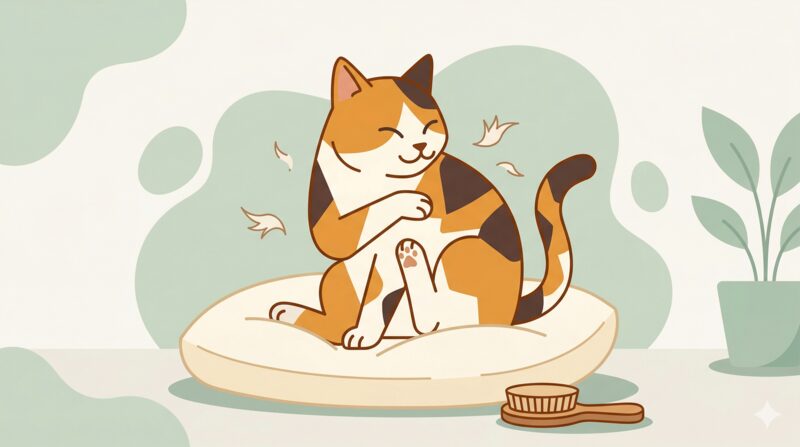
With normal shedding, the coat stays even in thickness, length and density, even if clumps collect on the furniture and your cat throws up the occasional hairball. Look closer when shedding leaves a mark: bald or noticeably thin patches, hair that looks broken or stubbly, or skin that’s red, scabby, sore or smells off. A cat who keeps licking, scratching or chewing one spot until it’s bare is usually telling you it itches or hurts.
If the coat thins while your cat is also losing weight, drinking and urinating more, eating differently, vomiting or seems low on energy, the fur is only a symptom and the problem may be elsewhere in the body. See your vet sooner rather than later.
Most hair loss comes from the cat licking or chewing it out because of an itch, and one of the most common causes of that itch is flea bite allergy. It doesn’t take a heavy infestation. For a sensitive cat, a bite or two can be enough to lick a patch bare, which is why indoor cats need parasite prevention too.
Mites can cause the same picture, and a fungal infection (ringworm, or dermatophytosis) makes fur fall out in patches, and it can spread to people and other pets, so patchy hair loss is a reason to see your vet. In older cats, hyperthyroidism is a common cause of coat changes, and diabetes can affect the coat too.
Stress is the cause owners think of first, and some anxious cats really do overgroom. But vets rule out other causes before calling it stress. When cats thought to be overgrooming from stress are examined closely, about three in four turn out to have a physical cause, most often an allergy. So if your cat has licked a bald patch on their belly, have your vet look before you blame anxiety.
Why cats shed
Each hair grows for a while, stops growing, then falls out and is replaced by a new one. Not every hair reaches that point at the same time, so a cat sheds a little all the time rather than all at once.
How much you notice depends on the coat. Most cats have two layers: protective outer guard hairs over a soft, dense undercoat that keeps them warm. Some breeds have little or no undercoat. The undercoat is usually what sheds most, so cats with a full double coat, and long-haired cats such as Maine Coons and Persians, simply shed more than cats with short, thin coats.
Season matters too, and it’s driven mainly by day length. Cats who go outdoors sense the longer days of spring and drop their thick winter undercoat in one big shed, with a smaller one in autumn. Indoor cats live under steady lighting and climate control all year, so they barely sense the seasons, and many shed evenly month to month. If your indoor cat seems to shed all the time, that’s usually normal.
The coat also reflects overall health. A cat on a balanced diet usually has a glossy coat and sheds normally. A coat that turns dull, greasy or brittle, or shedding that gets noticeably heavier, is sometimes an early sign of a nutritional gap or another health problem. Talk to your vet before buying supplements.
How to brush your cat
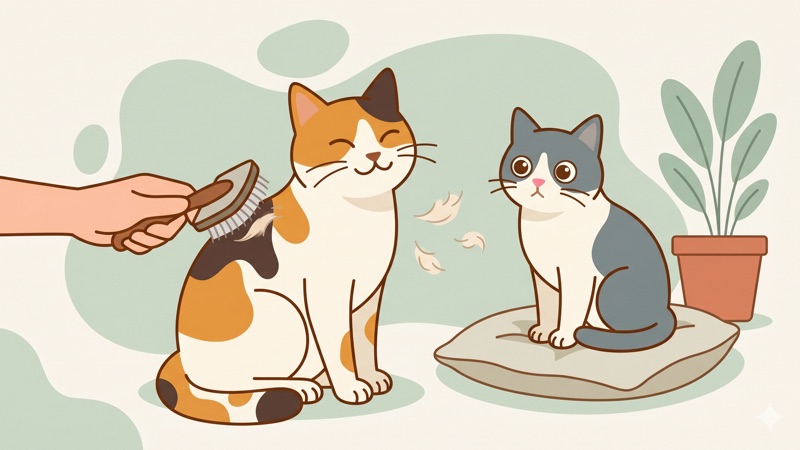
Brushing is the most useful thing you can do about shedding. Hair you brush out doesn’t end up on the sofa or in your cat’s stomach.
How often depends on the coat. A short-haired cat does well with a brush about once a week. A long-haired cat needs daily brushing, or every other day at the least, because long fur starts to tangle after a few missed days. A soft brush or a rubber grooming glove is enough for short coats. For long coats, a slicker brush plus a metal comb works better, since the comb reaches undercoat the slicker skims over.
Brush with the lie of the coat, from head to tail, and for long-haired cats follow with the comb to catch what’s left underneath. Spend extra time on the friction spots where tangles start: the armpits, belly, between the back legs, behind the ears and around the neck. Keep sessions short and pleasant, add treats, and stop before your cat has had enough. A kitten who learns early that brushing is no big deal is much easier to groom for life.
Brushing doubles as a body check. Your hands find things your eyes miss: a small lump, a scab, flea dirt, a spot that’s sore to the touch. It’s also a good time to check the nails. Older cats need extra help here. Stiff joints and dental pain can stop a senior cat grooming properly, so the coat gets greasy and starts to mat, and you need to make up for what they can’t do. The senior cat care guide covers other changes that come with age.
Mats, and how to deal with them safely
Mats form when shed hair doesn’t fall away and instead tangles into the coat, tightening over time into a dense felt. They mostly appear in the friction spots, and around the rear end too. A mat is more than untidy. It tugs the skin every time your cat moves, and a tight one can bruise or tear the skin underneath and trap moisture against it until the skin becomes sore or infected.
A small, loose mat you can often handle at home. Tease it apart with your fingers first, holding the base of the mat where it meets the skin so you pull on the mat, not the skin. Then work through it with a comb from the tips inward, a little at a time, rather than forcing the comb through. A sprinkle of cornstarch helps the hair separate, and a dematting comb can help with bigger tangles. Keep sessions short, and if your cat gets fed up, stop and try again later.
Never cut a mat out with scissors
It’s one of the most common ways owners accidentally hurt their cats. A tight mat pulls the skin up into its base, out of sight, so scissors slipped under it cut the skin, often badly enough to need stitches. If a mat won’t comb out, leave the scissors in the drawer and let a vet or groomer shave it off safely with clippers.
If a mat is large, tight against the skin, or your cat is clearly in pain or the skin underneath looks red and broken, don’t fight it at home. A groomer can shave it, but for a large or painful mat a vet is the better choice: they can lightly sedate your cat so they stay calm, and treat any damaged skin underneath. Regular brushing keeps the next one from forming, because shed hair comes out before it can mat.
Shedding and hairballs
Cats swallow a fair amount of hair while grooming. Most passes through the gut, but some collects in the stomach and comes back up as a hairball. If your cat keeps coughing or hacking and nothing comes up, it’s probably not a hairball. It could be asthma or another airway problem, so see your vet. If hairballs are a regular thing in your house, the hairball guide covers how often is normal and how to cut them down.
How Furwise can help
When you notice something in the coat, such as a new thin patch, a scab, or more shedding than usual, log a symptom in Furwise: choose “Overgrooming / hair loss” or “Scratching”, add photos and a note, and the date is saved with it. Show it to your vet at the visit instead of relying on memory. In a multi-cat home, each cat has their own records, so you won’t mix up who had what.
Frequently Asked Questions
Why does my indoor cat shed so much all year? It’s normal for indoor cats. Seasonal shedding follows day length, and indoor cats live under steady lighting and climate control all year, so they barely sense the seasons. Instead of one big shed in spring, they tend to shed evenly month to month. As long as the coat stays even, with no bald patches or skin problems, year-round shedding isn’t a concern.
How often should I brush my cat? It depends on the coat. A short-haired cat does well with a brush about once a week. A long-haired cat needs it daily, or every other day at the least, because long fur tangles after a few missed days. Brush with the lie of the coat and spend extra time on the armpits, belly, behind the ears and between the back legs, where tangles start.
When is shedding a sign of a health problem? Whether the coat is changing matters more than how much hair comes out. Watch for bald patches, thinning areas, broken or stubbly hair, red, scabby, sore or smelly skin, and a cat licking or scratching one spot bare. If the hair loss comes with weight loss, more drinking, a change in appetite, vomiting or low energy, the problem may be beyond the skin, so see your vet soon.
Can I cut a mat out with scissors? No. A tight mat pulls the skin up into its base, out of sight, so scissors slipped under it can cut the skin badly enough to need stitches. Work small mats loose with your fingers and a comb. If a mat won’t come loose, have a vet or groomer shave it off with clippers.
Do short-haired cats need brushing? Yes, just less often than long-haired cats. A weekly session with a soft brush or rubber glove removes hair before it lands on the furniture or gets swallowed, spreads the skin’s natural oils through the coat, and gives you a regular chance to feel for lumps, scabs or fleas.
Will bathing or shaving my cat reduce shedding? Neither is a good way to cut shedding. Cats groom themselves well and rarely need baths, and frequent bathing can dry the skin and dull the coat. Shaving a healthy coat isn’t recommended either: fur insulates against heat and cold and protects the skin, and it can grow back unevenly. Regular brushing is the safe, effective way to manage shedding. Save shaving for severe mats, done by a professional.
References
- International Cat Care. Grooming Your Cat. iCatCare
- Texas A&M College of Veterinary Medicine & Biomedical Sciences. A Thin Line: Normal Shedding vs. Feline Alopecia. Texas A&M VMBS
- VCA Animal Hospitals. Grooming and Coat Care for Your Cat. VCA
- Cornell Feline Health Center. Hyperthyroidism in Cats. Cornell University
- Waisglass, S. E., Landsberg, G. M., Yager, J. A., & Hall, J. A. (2006). Underlying medical conditions in cats with presumptive psychogenic alopecia. Journal of the American Veterinary Medical Association, 228(11), 1705-1709. PubMed